
Match Family: Triple Match 3D
Playful BytesCasual
4.7939.00 Reviews
- Version
- 1.23.0
- Installs
- 5.00M
- Age Rating
- Everyone
Screenshots
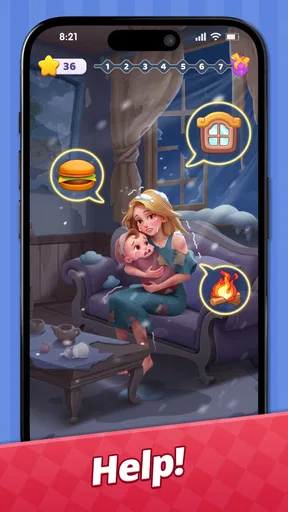
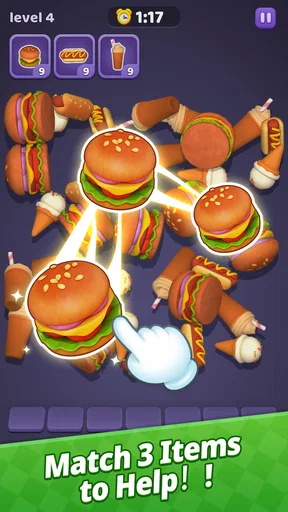
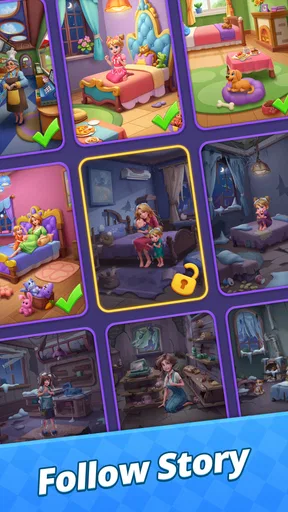
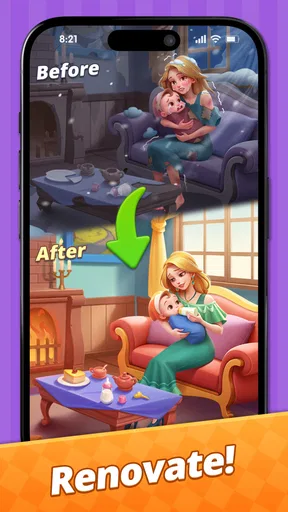
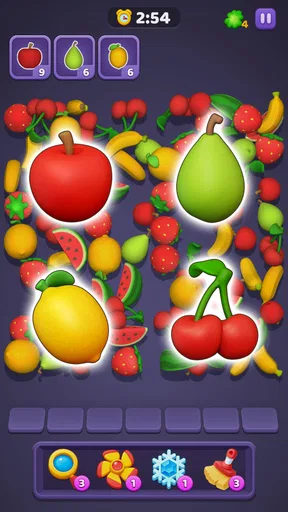
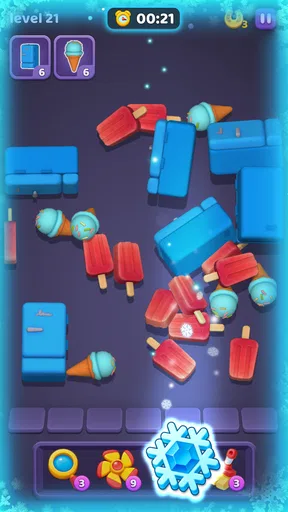
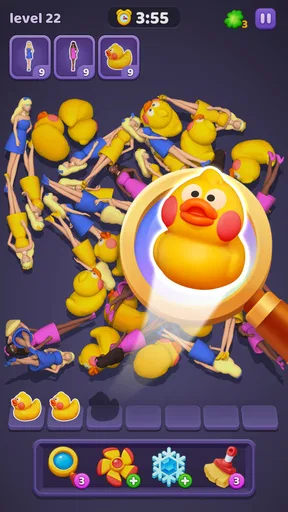

Our Review of Match Family: Triple Match 3D
 Analysis by Appyee
I started Match Family: Triple Match 3D expecting a simple sorting game, but its appeal comes from how quickly it turns a small action into a satisfying routine. I look across a crowded 3D scene, pick three matching objects, watch them disappear, and immediately begin scanning for the next useful group. That sequence is easy to understand, yet it creates enough tension to make “one more level” feel natural.
This is a casual game from Playful Bytes, available for free and suitable for Everyone. It has built a sizeable audience, with more than five million installs and a 4.7 average from roughly nineteen thousand ratings. Those figures make sense after spending time with it: the game is approachable within seconds, but it still gives me a reason to pay attention rather than tapping randomly.
How the matching loop feels in actual play
I find the matching loop works best when I treat each level as a small sequence of choices rather than a race to clear whatever catches my eye first. That makes the 3D layout easier to read and helps me notice how one match can improve the next decision. The next section looks at why the game’s steady pace can be a strength, while also explaining when its repetition may start to wear thin.
The first action is simple, but the board asks for attention
The opening move is familiar: find three objects that belong together and select them. The 3D presentation makes that more interesting than a flat tile grid because objects can be partially hidden, placed at different angles, or surrounded by distracting alternatives. I am not only identifying a matching type; I am also deciding which visible item is safe to remove first.
That small distinction matters. A careless tap can clear an easy trio while leaving a less obvious group buried behind it. When I slow down and inspect the whole arrangement before acting, the board feels less like a reflex test and more like a compact visual-planning puzzle. The game does not require complicated instructions, but it rewards a player who thinks one or two moves ahead.
The best way to begin a level is to avoid immediately choosing the first three identical objects I notice. I first look for items that are blocking other pieces or that appear in several clusters. This habit makes later decisions easier because I am managing the shape of the remaining board, not just collecting obvious matches.
That is one of the more useful insights I found while playing: the order of easy matches can matter more than the difficulty of spotting them. If I clear a trio that exposes a useful group, the level opens up. If I remove objects without considering what they reveal, the board can become visually messy and harder to read.
Feedback gives every tap a clear purpose
Each successful selection produces immediate visual confirmation as the matching objects leave the play area. That response is important because the game’s central pleasure is not deep strategy; it is the steady connection between seeing a possibility, acting on it, and receiving a clean result. The feedback keeps the pace moving without making me feel rushed.
I also like that the loop does not force me to understand everything at once. I can focus on one trio, see the space change, and reassess. This creates a rhythm of action and observation: choose, clear, inspect, choose again. When the board is arranged well, that rhythm becomes almost meditative, especially with the relaxing music contributing to the calmer tone.
The music is a good fit for short, low-pressure play sessions. I would not describe the experience as completely passive, because a crowded board still demands concentration, but the presentation avoids the harsh urgency found in many faster casual games. It works well when I want something to occupy my hands while taking a break rather than something that dominates my attention.
There is also a useful contrast between the calm soundscape and the occasional pressure created by limited room for mistakes. The peaceful presentation can make me overconfident, so I have learned to treat the board as a planning problem even when it looks relaxed. That balance is part of what keeps the game from becoming a completely automatic matching exercise.
Why the reward arrives before the level ends
The obvious reward is removing a matching trio, but the more meaningful reward is the new information revealed afterward. A cleared group changes the board. It may uncover another match, open a path to a blocked object, or simply reduce the number of possibilities I need to compare. The game therefore rewards both recognition and improved visibility.
That makes a successful chain feel better than an isolated match. I am not just collecting objects; I am creating a cleaner problem for my next decision. When several useful groups become available after one move, the reward is partly visual and partly mental. I can see that my previous choice improved the position.
The many levels help this structure remain useful over time. I can play for a few minutes and stop after completing a small objective, or continue when I am in the mood to settle into a longer run. The game’s free entry makes it easy to try without committing money at the start, although optional in-app purchases range from ninety-nine cents to ninety-nine dollars and ninety-nine cents per item.
That purchase range is worth keeping in mind before handing the game to a child or letting someone play on a shared device. The Everyone age rating makes the game broadly accessible, but the presence of optional purchases means I would still use the normal device safeguards I apply to any free-to-play title. For an adult who simply wants to test the core loop, downloading it costs nothing.
Resetting the session is part of the appeal
After a level ends, the board’s problem disappears and the next one offers a clean start. I appreciate that reset because it prevents a poor sequence of choices from defining the whole experience. If I make a messy opening move, I can learn from it rather than carrying a damaged position through a long campaign.
This reset also explains why the game fits short breaks so well. I can begin a level while waiting for a coffee, complete a few matches, and stop without needing to remember a complicated storyline or maintain a long-term strategy. When I return, the basic action is immediately available again: scan the scene, identify a trio, and decide what to clear first.
At the same time, the reset can feel repetitive if I am looking for a strong sense of progression outside the levels themselves. The game’s pleasure is concentrated in the matching process, the changing arrangements, and the steady stream of new boards. Players who need narrative development, character growth, or a competitive ladder may find the restart-based structure too light.
I also noticed that the game is strongest when I set my own stopping point. The loop is designed to make another attempt feel harmless because the next board begins from zero. That is convenient, but it can also encourage longer sessions than intended. My practical approach is to finish a level and then decide whether I genuinely want another one, instead of starting the next board automatically.
What makes the 3D format useful rather than decorative
The three-dimensional objects are not only a visual theme. They change how I search. On a flat board, matching often means comparing color, shape, or symbols in fixed positions. Here, I have to interpret objects as recognizable things and judge their placement in a more crowded scene. That gives the game a tactile quality even though the interaction remains simple tapping.
The format is especially effective for players who enjoy visual sorting. I find myself grouping objects mentally before touching the screen: these three belong together, that item may be hidden, and this group is probably safer to clear later. The models make the search feel more concrete than matching abstract colored squares.
There is a trade-off, though. A 3D arrangement can be harder to read when several objects look similar or overlap visually. The same presentation that makes a level interesting can also create uncertainty. I sometimes spend more time confirming whether an item belongs to a group than I would in a traditional tile-matching game.
That is why I would not recommend rushing through the board. A slower first scan usually produces better decisions than rapid tapping. If a player prefers immediate reactions and highly predictable layouts, a classic match-three game may feel clearer. If the player enjoys inspecting a scene and uncovering possibilities, this format is a better fit.
Where it fits among casual alternatives
Compared with conventional match-three games built around swapping adjacent gems, this one feels more like object recognition and inventory sorting. There is less emphasis on creating elaborate cascades through a grid and more emphasis on choosing which trio to remove from a shared space. That difference gives it a calmer, more observational identity.
It also differs from hidden-object games. I am not searching for one specific item in a detailed picture; I am repeatedly building groups of three and managing what remains. The objective is more active than simple spotting, because every selection changes the conditions for the next selection.
Compared with pure sorting games, the 3D scenes provide more visual variety and a stronger sense of discovery. However, players who want precise organization, strict color rules, or a highly structured puzzle system may prefer a dedicated sorting title. Match Family: Triple Match 3D sits between relaxed object matching and light planning, which is exactly why it works for me but may not satisfy someone seeking a demanding logic game.
It is also a better choice than a fast arcade game when I want a gentler pace. The action is still interactive, but I can pause mentally between choices. On the other hand, someone looking for constant motion, timed reactions, or direct competition should probably choose a different casual category altogether.
Small habits that improve the experience
My first practical tip is to scan for obstruction before matching the most visible trio. Clearing a group that exposes several objects can be more valuable than clearing a group that merely looks convenient. This is not a complicated strategy, but it changes the game from random selection into controlled board cleanup.
Second, I try to keep track of partial groups. If I see two matching objects and a third that may be hidden nearby, I remember their locations before making unrelated moves. That prevents me from treating every turn as a fresh search and helps me recognize opportunities as the board opens.
Third, I avoid filling the available selection area with uncertain choices. When I am not sure that a group can be completed soon, I prefer to wait and clear a confirmed trio first. This keeps the board easier to manage and reduces the chance that an impulsive tap creates an awkward position.
These habits are useful because the game’s relaxing presentation can disguise the importance of sequence. I do not need expert-level planning, but I get better results when I combine visual patience with deliberate clearing. The reward is not just finishing; it is finishing while keeping the board understandable.
Who should play it, and who should skip it
I would recommend it to anyone who likes casual games that can be understood immediately but still offer light decision-making. It is particularly suitable for short breaks, quiet evenings, and players who enjoy sorting recognizable objects rather than managing complicated menus or rules. The Everyone rating also makes its basic concept accessible to a broad audience.
It is a good match for people who enjoy relaxing music and a steady action-feedback loop. The game gives me a clear reason to begin another level: the previous board has been solved, the next arrangement is unknown, and the first few matches are easy to start. That invitation is simple, but it is effective.
I would skip it if I wanted a story-driven game, a deep strategic system, or a strong multiplayer component. The core experience is intentionally focused. Even with many levels, the main activity remains selecting groups of three, watching the board change, and repeating the process. Anyone who tires quickly of visual matching may feel the repetition sooner than I did.
I would also think twice if I dislike free games with optional purchases. The game can be started for free, but the listed purchase range reaches from $0.99 to $99.99 per item. That does not change the basic appeal of the matching loop, but it is relevant to how I would manage the game on a family device or for a younger player.
Device expectations and practical setup
The current version is 1.23.0, and the game requires Android 8.0 or later. For someone deciding whether to install it, the operating-system requirement is the first practical check. On a compatible device, the game’s simple interaction should be easy to understand, but the 3D presentation still benefits from a screen where objects are comfortable to distinguish.
I would play with enough brightness to separate similar models without making the screen uncomfortable. Since the game depends on spotting small visual relationships, readability matters more here than it would in a purely text-based casual app. If I am tired or distracted, I make more mistakes not because the rules are difficult, but because I overlook a useful object in the scene.
The game’s audio is part of its identity, so I prefer trying it with sound enabled at least once. The relaxing music supports the slower rhythm, although I would mute it when playing in a public place or while listening to something else. The loop remains understandable without making the music essential to every decision.
My verdict on the reason to start another session
The complete loop is clear: I inspect a 3D arrangement, select a trio, receive immediate visual feedback, see the board become more manageable, finish the level, and receive a fresh puzzle to consider. The reason to start again is not a complicated reward system; it is the promise of a cleaner board, a better sequence, and the satisfying feeling of turning visual clutter into order.
For me, that is enough to make Match Family: Triple Match 3D a pleasant casual game rather than a disposable time filler. Its strongest quality is the balance between a peaceful presentation and small but meaningful choices. I can play casually, yet I still feel that careful observation improves the result.
Playful Bytes has kept the concept focused, and that focus is both the game’s strength and its boundary. I enjoy it when I want a self-contained puzzle session with recognizable objects, gentle music, and no need to learn a large system. I would choose something else when I want narrative, competition, or more demanding strategy.
Overall, I think it is worth trying if the idea of clearing groups of three from 3D scenes sounds appealing. The best experience comes from treating each match as preparation for the next one, not merely as a tap to remove objects. That small shift turns the repeated action into a satisfying routine, and it is the main reason I keep returning for another board.
Verdict
Strengths of Match Family: Triple Match 3D
- Simple drag-and-match controls are easy for beginners to learn.,3D objects are clearly modeled and satisfying to collect in groups.
- Short levels make it convenient for quick gaming sessions.
- Increasing difficulty keeps the matching challenge engaging.
- Family-friendly gameplay is suitable for a wide range of ages.
Limitations of Match Family: Triple Match 3D
- Later levels can feel repetitive without significant gameplay variety.
- Small objects may become difficult to identify on smaller screens.
- Timed challenges can feel stressful rather than relaxing.
- Progress may depend heavily on watching ads or using boosters.
- Mistakes are easy to make when several similar items appear together.
Other Releases by Playful Bytes
View All
Take Off Bolts: Screw Puzzle
Puzzle4.1

Mahjong Mingle
Board4.8

Find Hidden Cats- Spot it!
Casual4.8

Mahjong Slide: Zen
Board4.7
Similar Picks in This Category
View All
My Talking Angela
Outfit7 Limited4.2

My Talking Tom
Outfit7 Limited4.3

Pou
Zakeh4.2

My Talking Tom 2: Pet Game
Outfit7 Limited4.3

Candy Crush Saga
King4.6

Bridge Race
Supersonic Studios LTD4.1
Frequently Asked Questions
What is Match Family: Triple Match 3D, and how is the gameplay structured?
Match Family: Triple Match 3D is a casual puzzle game based on sorting and matching three identical 3D objects. You search through a cluttered board, tap matching items, and place them into limited tray spaces until every object is cleared. The game starts with simple levels, then introduces more items, obstacles, and tighter layouts that require observation, planning, and quick decision-making.
Is Match Family: Triple Match 3D free to download and play?
The game can generally be downloaded for free on supported Android and iOS devices, allowing players to access the core matching experience without an upfront purchase. However, free-to-play games commonly include optional advertisements and in-app purchases, such as boosters, extra moves, or other advantages. Check the store listing and your device’s payment settings before downloading, especially if children may use the device.
Does Match Family: Triple Match 3D require an internet connection?
Some basic puzzle levels may be available without a constant internet connection, but online access can still be needed for advertisements, rewards, events, progress synchronization, updates, or purchases. Offline behavior may also vary between versions and devices. If you plan to play while traveling, it is best to test the game in airplane mode first rather than assuming every feature will work offline.
Are there boosters or extra-help features in Match Family: Triple Match 3D?
As the levels become more crowded and the available tray fills quickly, assistance features can be useful. Match Family: Triple Match 3D may provide tools such as hints, shuffles, undo actions, or additional spaces, depending on the current version and level design. These aids are usually limited resources, rewarded through gameplay, or offered through optional purchases, so using them strategically is important.
Is Match Family: Triple Match 3D suitable for children and casual players?
The straightforward tap-to-match controls make Match Family: Triple Match 3D approachable for casual players and older children who enjoy visual puzzles. Nevertheless, difficulty increases over time, and advertising or optional purchase prompts may affect the experience. Parents should review the game’s age rating, privacy information, and in-app purchase settings, then enable parental controls if the application will be used by a child.
Play our best games!


